
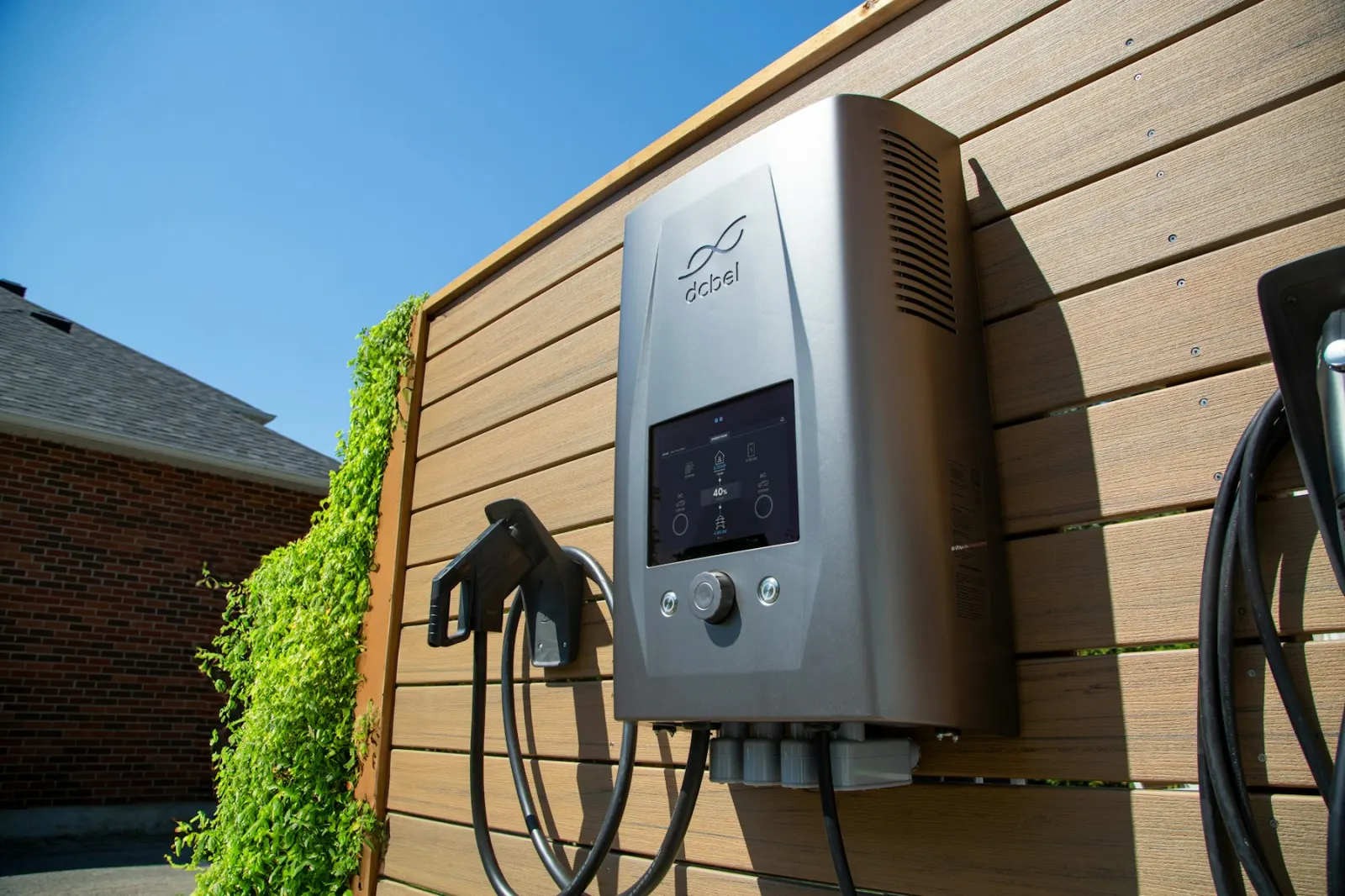
More and more driveways in Point Cook, Tarneit, Truganina and Manor Lakes have an electric car or plug-in hybrid parked in them. Most EV owners do the bulk of their charging at home, overnight or from their solar during the day. Here’s what to think about before you install a home charger.
Do you need a wall charger at all?
Most EVs come with a portable charging cable that plugs into a standard power point. It works, but it’s slow, often adding only enough range overnight for a short daily commute.
A dedicated wall charger is much faster and built for daily use. It runs on its own circuit, so it doesn’t compete with your other appliances. If you drive any distance each day, and many people commuting from Wyndham do, a wall charger makes life easier.
Whatever you do, don’t charge your car through an extension lead or power board. They aren’t designed for long, heavy loads and can overheat.
Single-phase or three-phase?
Most homes in Melbourne’s west have a single-phase supply. That’s fine for home charging. Some newer homes and larger properties have three-phase power, which can allow faster charging with the right charger and car. We can check what you have, and it’s often visible on your switchboard or meter.
Check your switchboard first
An EV charger is one of the biggest loads your home will have. Before installing one, an electrician should check:
- whether there’s spare space on the switchboard for a new circuit
- the size and condition of your main supply cable
- what else you run at the same time, such as air conditioning, ovens and hot water
- whether safety switches are in place
Older boards, or boards that are already full, may need work first. See signs your switchboard needs upgrading.
Choosing a location
- Mount the charger close to where the car usually parks, with the cable reaching the car’s charge port comfortably.
- Garages and carports are ideal. Outdoor chargers need to be rated for the weather.
- Think about a short, tidy cable run back to the switchboard. It keeps costs down.
- Keep the cable clear of walkways so nobody trips on it.
Charging from solar
If you have solar panels, many chargers can prioritise solar power, charging the car with energy you’d otherwise export for a small feed-in credit. If you’re on a time-of-use plan, scheduling charging overnight in off-peak hours can also save money. We set up these features when we install the charger, if your system supports them.
Planning solar or a battery as well? Tell us early. It’s often cheaper to plan the switchboard work for everything at once.
Townhouses and rentals
If you rent, you’ll need the owner’s permission. If your home is part of an owners corporation and the charger affects common property, such as a shared car park or wall, you may need approval first. We can give you the details the owner or committee will need.
Certificates and approvals
A home charger is electrical installation work, so it must be done by a licensed electrician. You’ll receive a Certificate of Electrical Safety. Some larger installations may need extra checks or approval from your electricity distributor, and we’ll tell you upfront if that applies to you.
How long does charging take?
It depends on your car’s battery size, its onboard charger, the charger you install and your supply. As a general rule, a dedicated wall charger adds range several times faster than the portable cable in a standard power point. For most people driving to work and back, plugging in overnight on a wall charger means a full battery every morning.
Questions to ask your installer
- Is my switchboard and main cable suitable, or will they need work?
- Single-phase or three-phase: what will my home support?
- Can the charger use my solar, or charge on a timer?
- Where should it go, and how long a cable do I need?
- Will I need any approval from my distributor or owners corporation?
- Will I receive a Certificate of Electrical Safety?
What does it cost?
It depends on the charger, the length of the cable run, and whether your switchboard needs work. Independent price guides currently put typical Melbourne EV charger installations, including the charger, at roughly $1,050 to $3,150. Every job is quoted. Sending us photos of your switchboard and where the car parks often lets us quote without a visit.
Thinking about a home EV charger?
We’re a family-owned, licensed electrical business based in Point Cook, with more than 25 years of experience. We work across Williams Landing, Werribee, Hoppers Crossing, Tarneit, Truganina and the rest of Melbourne’s west, and we take emergency calls 24/7. Find out more about our ev charger installation service.
Call us on 0405 418 132, or send a few details and a photo of the job. Every job is quoted before we start.